By Melissa Fields
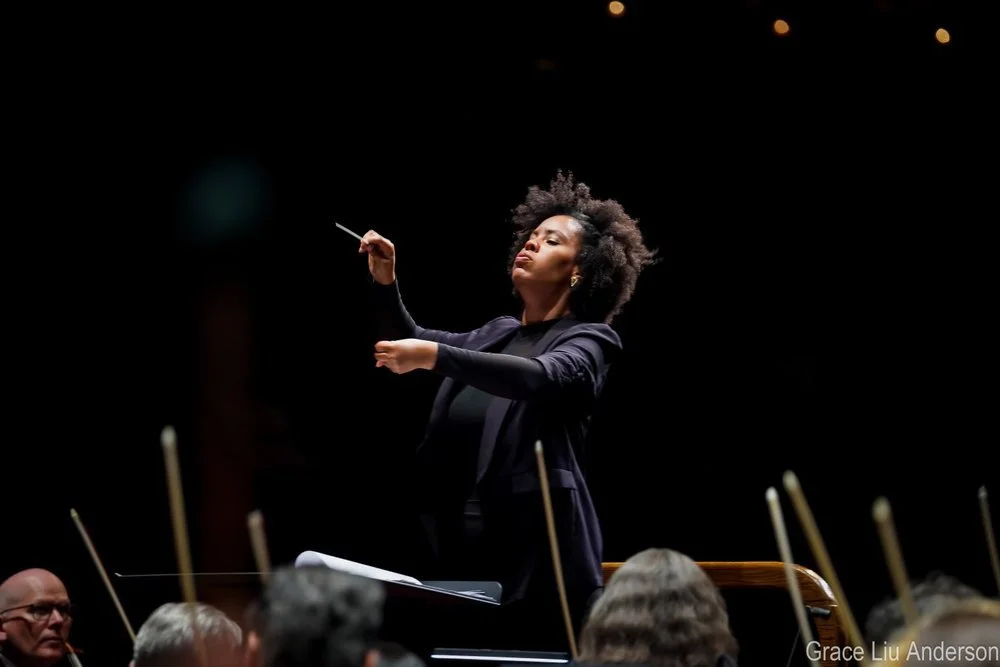
Assistant Conductor Jessica Rivero Altarriba
In a state ranked woefully low for women’s equality, there exists a shining beacon of progress: the Utah Symphony. Forty women and 46 men make up the 84-year-old orchestra’s almost gender-equal musician roster, and, even more impressive, many of the symphony’s leadership positions are also held by women, including Associate Concertmaster Kathryn Eberle and new Assistant Conductor Jessica Rivero Altarriba. Here Eberle and Altarriba discuss the inspiring professional paths they’ve forged, the critical encouragement they received along the way and how they are using their roles to musically shape the next generation, regardless of gender.
When I met Kathryn Eberle at a downtown coffee shop, her wide, friendly smile and warm handshake gave me a distinct sense of déjà vu. Meeting her felt more like getting together with a college friend or former work colleague than getting acquainted with a woman who is arguably one of Utah’s most accomplished resident musicians. Not only has Eberle been associate concertmaster of the Utah Symphony for the past 13 years, but she also serves as concertmaster of Los Angeles’s Hollywood Bowl Orchestra and, along with a laundry list of other accolades and honors to her credit, has completed stints as guest concertmaster for the Kansas City, Omaha and Richmond Symphonies.
For those (like me) unfamiliar with what a concertmaster, or violin section first chair, does in an orchestra besides play the violin, Eberle explained. “A concertmaster serves as the liaison between the conductor and the rest orchestra.” The specific duties of this critical role include translating how the conductor wants the music to both sound and feel, leading the orchestra in tunings before rehearsals and performances and playing violin solos during a performance when there is no guest soloist. Concertmasters also make sure all the violins’ bows move in the same direction, at the same time, creating a more visually and auditorily unified performance. “There’s all sorts of physics-related aspects to bowing,” Eberle says. “For example, a violin naturally emits the strongest sound when the bow is held on the strings closest to where the musician holds the bow, an area of the bow called the frog.”
As associate concertmaster, or violin second chair, for the Utah Symphony, “I wear two different hats,” Eberle said. “I support Madeline [Adkins, Utah Symphony concertmaster], through a variety of tasks, from turning the pages of the music in time to helping facilitate what she is trying to convey to the rest of the section. And then when Madeline is not there,”—Adkins is also concertmaster for the Grand Teton Music Festival Orchestra and, like Eberle, often serves as guest concertmaster with other orchestras—”I then step into her role.”
Though she and Adkins, as well as the symphony’s second associate concertmaster, Laura Ha, are all women, she’s much more willing to attribute her concertmaster team’s success to factors bigger than gender. “I feel incredibly privileged to sit in the middle of that,” Eberle said. “I can’t remember who said it, but the quote ‘You miss all the shots you don’t take’ really resonates with me. I feel like all three of us took the shot and we’re all here because of that.”
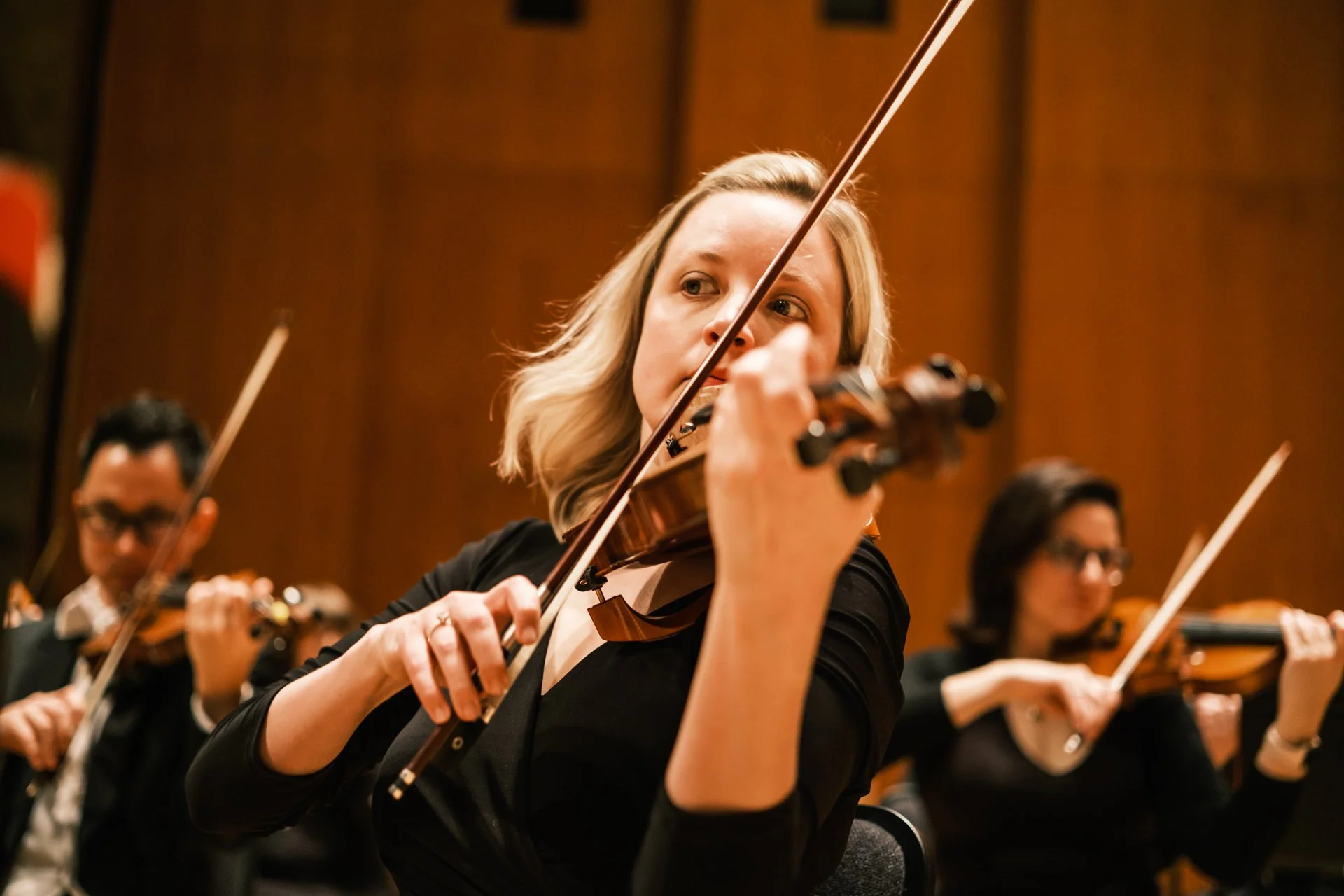
Associate Concertmaster Kathryn Eberle
Eberle’s path to becoming a violinist began almost before her memory. At age three, her mother enrolled the two of them in Suzuki Method lessons, a violin learning philosophy where parental involvement is key. “My mom thought it would be something fun to do with her daughter,” Eberle says. Highlights of what followed her almost accidental beginning with the violin include winning a concerto competition and getting to perform a solo with an orchestra at age 11, “that was the moment I knew I wanted to be a violinist,” she says; attending a summer camp in her teens where she met Robert Lipsett, the teacher she’d study under for nine years; earning her master’s degree from Juilliard; and, of course, landing her current job with the Utah Symphony.
Among the people who inspired Eberle to “take the shot” many times over during the course of her career is Cornelia Heard, professor of violin at Vanderbilt University and one of Eberle’s first violin teachers in her Nashville, Tennessee hometown. “Connie had an enormous impact on my desire to become a professional violinist,” Eberle says. “I often think of her wonderful example when I interact with student musicians and hopefully pass along some of her encouragement and support.”
Interacting with students—and not just student musicians—is, in fact, one of Eberle’s most coveted parts of her job. “Between the Utah Symphony and the Utah Opera, we perform live for every school district in Utah every four years—an outreach effort that’s pretty rare. In fact, this past season alone USUO served more than 100,000 students and teachers,” she says. “I often hear adults tell me that they remember seeing the Utah Symphony perform when they were in grade school. It clearly makes a big impact and can help foster a lifelong love of the arts, a curiosity to learn more or even spark a desire to play an instrument.”
An ocean separated Jessica Rivero Altarriba and I as we spoke earlier this summer via video call, and despite having just stepped off a flight from New Jersey to Spain, her effervescent personality transmitted as succinctly as if we were sitting together in the same room. “My family is very musical,” Altarriba recalled as we chatted about her childhood in Cuba. “My father is a percussionist, and I have great memories of playing the maracas with him in his band.”
Altarriba’s official musical education began with piano lessons when she was 7 and progressed to the flute two years later. Shortly thereafter, when Altarriba was in middle school, her course for a career in music was set. “Being derived from Russian pedagogy, the education system in Cuba is very strict,” she explained, “meaning once you choose a vocation, you’re expected to stick with it.” Though the approach is seemingly rigid, and Altarriba is grateful for how it helped her develop discipline, later when she entered conservatory, her desire for greater artistic freedom drew her away from playing music to conducting. “I connected very quickly with the conducting world,” she said. “I found it was the best way to express myself.”
Cuba is strongly influenced by jazz and so, in 2018, after earning her undergrad from Arts University in Havana, Altarriba moved to Barcelona, Spain to hone her classical music proficiency. While there, curious about how the brain is impacted by music, she also completed a master’s degree in music therapy. “I want to create a connection with people that transcends the music. I want people to feel connected to me at the podium, to experience the music with me. It’s easy to disconnect from the healing power of music and now, that’s something that’s always in the front of my mind.”
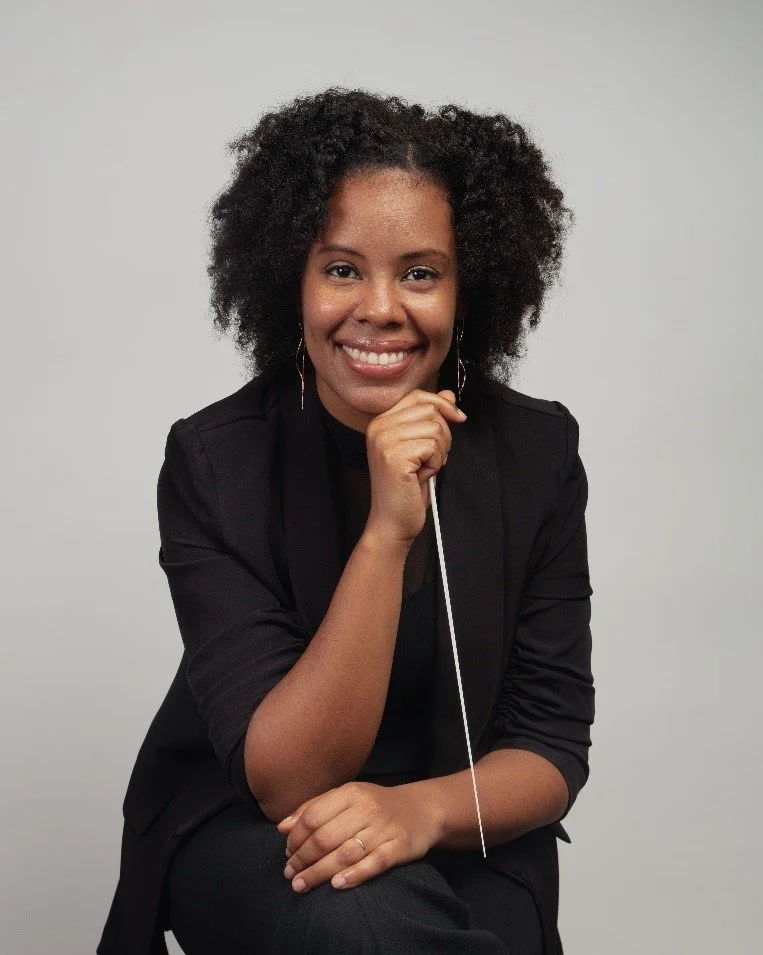
Moving to the U.S. was “never in my plan,” Altarriba said, “but sometimes you go where the doors open.” That proverbial door opened wide when she was chosen to study under Maestra Marin Alsop at the Peabody Institute of John Hopkins University in Baltimore, Maryland. Working with Alsop, who is one of the world’s preeminent conductors and a tireless champion of raising women to the conductor podium, turned out to be a seminal moment for Altarriba. “Equity doesn’t exist in the field of conducting. Marin really helped motivate me to, despite being a woman and black, reach for my goals anyway. I now feel a lot of responsibility to show the next generation that they can be whomever they want to be and that there’s no reason your gender or the way you look needs to determine your future.”
Inspired by her mentor, as well as her recent appointment with the Utah Symphony, Jessica is “on a mission to transform the halls,” she says. “When I conduct, I always seem the same people … older adults. It makes me wonder what audiences will be like when I am old. I hope to bring a different energy to audiences, one that’s more relevant to a younger generation.”
Salt Lake City’s deep well of support for music, and how Utahns value and validate the arts in general, were among the reasons when, earlier this year, Altarriba decided to throw her hat in the ring to audition for assistant conductor with the Utah Symphony. “I felt musical chemistry with the [Utah Symphony] from the first moment” she says. “It felt so easy to create a high level of music with them. There was such a deep spirit of musical collaboration.”
Altarriba begins her appointment at the end of August and will makes her public performance debut with the Utah Symphony when she conducts the annual Halloween Spooktacular concert on October 29.
An aspect of her new role with the Utah Symphony that Altarriba is looking forward to in particular is working alongside Concertmaster Madeline Adkins and Associate Concertmaster Kathryn Eberle. “There’s just something different and special when women work together,” she says. “I think women have a unique understanding of what it is to work on a team that focuses on benefiting everyone, especially the audience.”